How to Choose Good Quality Makhana: A Simple Buying Guide
How to Choose Good Quality Makhana: A Simple Buying Guide
Two packs of makhana can look similar on a shelf and still be very different once you open them. Whether you want raw makhana to roast at home or a ready-to-eat flavoured snack, here is a simple guide to choosing good quality makhana.
- Know the grades
- Read the label
- Buy with confidence
First, decide: raw or ready-to-eat?
Raw makhana
Plain, unseasoned fox nut. You roast and season it yourself, or use it in recipes like kheer and curries.
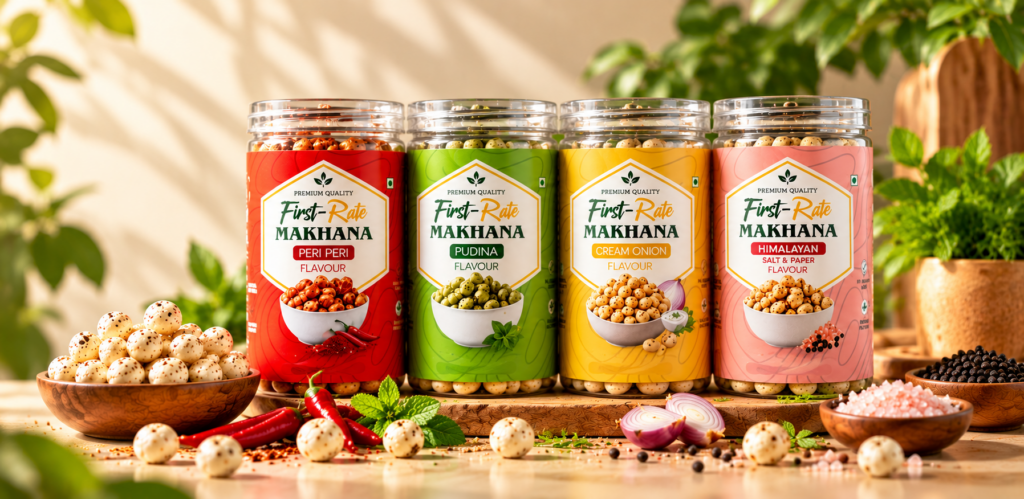
Ready-to-eat makhana
Already roasted and flavoured, so you can snack on it straight from the pack.
Understand size and grade
Raw makhana is often sold by size, using grades such as “4 Sutta”, “5 Sutta” or “6 Sutta”. A higher number means bigger pieces. Bigger, evenly sized makhana usually pops better and looks better in a bowl.
Grading is not perfectly standard across sellers, so treat it as a guide and look at the pieces too.
Look at the makhana
Check the crunch and smell
Fresh
Feels light and crisp. Smells clean and neutral, or of its seasoning.
Past its best
Chewy or rubbery. Smells stale, musty or rancid.
Read the label
Know where it comes from
Most of India’s makhana comes from Bihar, especially the Mithila region, where it has been grown and processed for generations.
In 2022, Mithila Makhana received a Geographical Indication (GI) tag, which recognises its link to the region. Brands that are clear about sourcing are generally easier to trust.
2022
Choose the right packaging
Makhana absorbs moisture easily, so packaging matters as much as what is inside. Look for properly sealed packs, prefer jars or resealable packs, and pick a size you will finish while it is still crunchy.
A jar you can close tightly keeps the last handful as crunchy as the first.
Don’t judge by price alone
A higher price can reflect a bigger grade or better packaging, but it is not a guarantee of quality on its own.
Compare the price per gram, then check size, freshness and the label.
Quick buying checklist
- The right format: raw or ready-to-eat
- Even, good-sized pieces, few broken bits
- White to off-white, clean, no mould or insects
- Light and crisp, with a fresh, clean smell
- Clear ingredients, nutrition and net weight
- FSSAI number, batch number and best-before date
- Clear sourcing information
- Sealed, preferably resealable packaging
Frequently asked questions
Is bigger makhana always better?
Bigger pieces usually look better and pop more evenly, but freshness, cleanliness and proper storage matter just as much. A well-packed smaller grade can be a better buy than a stale large one.
Why does some makhana have brown spots?
Small brown patches are usually leftover bits of the seed’s natural outer coat. A few are normal. Many dark, discoloured pieces may point to lower quality.
What should I check on flavoured makhana?
Read the ingredient list, check the nutrition information and serving size, and look at the best-before date. Make sure the pack is well sealed so it stays crunchy.